Skip to content
IMC Australia
Members Area
  • Join
  • Training
  • Events
  • Conference
  • ISO 20700:2025
  • Blog
  • Find a Consultant
  • Membership
    • CMC Application
    • CMC Recertification
    • Membership Benefits
  • Contact
  • About
    • Governance
    • Leadership team
    • Code of Conduct & Ethics
    • Mission and strategy
    • Our partners
    • Chapters
      • ACT Chapter
      • NSW Chapter
      • QLD Chapter
      • SA / NT Chapter
      • VIC / TAS Chapter
      • WA Chapter
  • Shop
  • 0 items

WA Chapter

Articles

WA ACM 2022

29/10/2022

2022 National AGM documents

12/10/2022

What’s Happening at IMC? – 2022 April Edition

07/04/2022

What’s Happening at IMC? – 2022 February Edition

02/02/2022

Committee

Mr Jon Bilson, MIMC CMC, FAIM - President

Mr Martin Graham - Member

Mr Peter N. Westlund, MBA, MIMC CMC, FAIM, GAICD - Member

Mr Jonathan Wilson, MIMC CMC - Member

Jane O'Halloran - Member

Events

Loading...

Resources

  • Join Our LinkedIn Group
  • All Resources
  • Management Consulting Journal
  • Links

Membership

  • Levels of membership
  • Membership fees
  • Privacy Policy

Global CMC news & events

  • CMC Today newsletter
  • ISO 20700 Guidelines
© 2024 IMC - Institute of Management Consultants Australia
Terms & Conditions • Privacy Policy

Tony Simmonds, CMC

President Director, Interlink Technology Services Indonesia

Tony has been consulting and delivering training services across many industry sectors such as Defence, Infrastructure, and Government (all 3 level) and countries such as Australia, New Zealand, UK, Middle East and Indonesia. He has been doing this for 30+ years and still doing it. Recent work includes North Sumatera (Electricity Infrastructure); Risk assessment for a Gold Mine (Greenfield Site) in South Sulawesi and delivery of Project & Risk training and consultancy projects within Australia and Indonesia. He owns a variety of companies including an RTO in Brisbane and a Consultancy Business with his partner and wife Dr Maria Radyati. He has industry certifications such as IPMA Level A Program Manager, CPPD, CMC, CPRM. He developed the Diploma of Consultancy to provide a pathway to achieve the CMC. He has a passion for building organisational and individual capability.

Consulting in the Wild Wild East; An Indonesian Perspective

This presentation explores the evolving consulting landscape in Indonesia by examining its historical context, current governance structures, and future development trajectory. It provides an overview of Indonesia’s multi-level system of government and its implications for consulting practice. Drawing on case studies from professional experience and organizational perspectives, the presentation highlights key challenges and opportunities within the consulting profession. Particular attention is given to the role of Western consultants operating in the Indonesian context, including cultural, regulatory, and ethical considerations. Finally, the presentation evaluates the relevance and potential adoption of ISO 20700 standards in Indonesia, with reference to the role of a potential IMC Indonesia in shaping professional consulting practices.

Celal Seckin

Board Director, ICMCI

Celal Seçkin, founder of Seçkin Consultancy and Training, a Turkey-based company providing management consulting services in organisational performance management, leadership, change management, strategic planning and continuous improvement culture. In addition to these services, he worked as Award Manager for local and global awards based on EFQM Model and led numerous organisational excellence assessments in all sectors in many countries. Celal has been awarded as Ambassador of Excellence by Turkish Society for Quality and by EFQM (European Foundation for Quality Management).

Currently, he is a Board Director and Chair of Professional Development and Standards Committee at ICMCI.

The New Version of ICMCI CMC© Competence Framework

The new version of ICMCI CMC© Competence Framework has been developed as an outcome of a comprehensive review process with the involvement of an extensive group of stakeholders. Surveys have been sent to IMCs, their committees, ICMCI’s external partners, IQA Assessors as well as Management Consultants awarded with CMC©. Feedback from stakeholders have been collected via questions covering areas such as learning from the use of the Framework by Stakeholders, linkage with standards relevant to management consulting, impact of transformation and global megatrends including digitalisation and the use of Artificial Intelligence.

Through intensive consideration of feedback, existing structure and content of the Competence Framework have been carefully reviewed to develop the new version with the aim of restructuring it as simple and lean as possible but keeping the necessary details to support the future of Management Consultants.

The overall review process and the new version of CMC© Competence Framework will be presented during the session at the ICMCI Asia Pacific Hub in May 2026.

Gergana Mantarkova

Independent Non-executive Director and Advisor

Coming soon

Maria R Nindita Radyati, PhD

President Director, Institute for Sustainability and Agility

Maria Rosaline Nindita Radyati, PhD, CNZ is a sustainability strategist and ESG governance expert with over 20 years’ experience across Indonesia and internationally. She is Founder and President Director of the Institute for Sustainability and Agility (ISA), supporting organisations to embed ESG into operations, and Founder of ISA Academy.

Maria holds leadership roles with KADIN and the United Global Compact Network Indonesia, and has advised on Indonesia’s CSR Law and national CSR strategy. She is a Visiting Lecturer at Sanata Dharma University and founded the Master’s Program in CSR and Sustainability at Trisakti University. She holds a PhD from UTS and is a Certified Net Zero Carbon Emissions Leader.

Consulting in the Wild Wild East; An Indonesian Perspective

This presentation explores the evolving consulting landscape in Indonesia by examining its historical context, current governance structures, and future development trajectory. It provides an overview of Indonesia’s multi-level system of government and its implications for consulting practice. Drawing on case studies from professional experience and organizational perspectives, the presentation highlights key challenges and opportunities within the consulting profession. Particular attention is given to the role of Western consultants operating in the Indonesian context, including cultural, regulatory, and ethical considerations. Finally, the presentation evaluates the relevance and potential adoption of ISO 20700 standards in Indonesia, with reference to the role of a potential IMC Indonesia in shaping professional consulting practices.

Sue Bowman

Chair, IQA

A Certified Management Consultant (CMC®) since 2000, [Name] began their career with Coopers & Lybrand, later becoming part of PwC. During this time, they worked internationally, including a two-year placement in Switzerland across Vevey, Basel and Lausanne.
After a decade with the firm, [Name] transitioned to independent consulting, specialising in programme and project management across large-scale IT and business transformation initiatives in both the public and private sectors. They have led clients through complex change, delivering integrated, end-to-end solutions while aligning stakeholder needs with practical business outcomes.
Working closely with stakeholders at all levels, [Name] is known for translating complex requirements into effective, deliverable solutions. They now contribute to the profession through leadership roles with IQA and ICMCI, serving as Chair of IQA and supporting a global community of assessors and consultants.

Readiness of IMCs for Assessment: The Process, Documentation, and Role of Assessors

The presentation from IQA is focused upon sharing how we as IQA operate and what is required of the IMCs when their Triennial Assessment is due. This will include a short Overview of the process together with an introduction to the key documentation requirements to meet our guiding principles of Equivalency and Reciprocity.

The presentation will also stress IQA recommendations on IMC Readiness. As part of the Triennial Assessment, IQA now requests confirmation of commitment from the IMC to a regular review of their succession planning together with maintaining their operational processes and supporting documentation at all times.

Alan Blackman

Adjunct Associate Professor, Griffith Business School

Alan Blackman is an experienced management consultant, academic, and author with a career spanning industry, education, and professional consulting practice. He is an Adjunct Associate Professor at Griffith Business School and a CMC-Global Academic Fellow, with longstanding involvement in advancing professional standards through the International Council of Management Consulting Institutes.
Alan’s career includes founding and leading a management consulting and research firm, as well as senior academic roles where he designed and delivered work-integrated learning and global internship programs. His work focuses on business strategy, consulting practice, and the development of emerging professionals.
A Churchill Fellow, Alan holds an MBA, Master of Law, and PhD, and has published extensively on management consulting and the Gold Coast economy.

Be Guided By Your Moral Compass

Recent events in Australia exposed by a parliamentary inquiry have laid bare the high reputational costs of professional malfeasance for management consultants.

Loss of career, future business, and professional status has devastated the accounting, auditing, legal, and management consulting components of at least one of the Big Four firms. This paper discusses the importance of consultants developing a moral compass and adhering to well-founded codes of ethics. It also highlights the importance of creating a corporate culture and codifying ethical standards to protect
clients and the profession.

Nick Warn

Nick Warn

Chair, International Council of Management Consulting Institutes

Nick Warn is a Chartered Engineer and Certified Management Consultant. He is a Fellow of the UK Institute of Consulting, Chair of the International Council of Management Consulting Institutes (ICMCI) and represents the ICMCI Board on its accreditation body - Institute Quality Assurance (IQA).

Nick has been a consultant since 1990 when he founded a consultancy practice engaged in business transformation and performance improvement in a variety of sectors and with collaborations in East Europe and the Middle East. After closing that company during COVID he now continues to work as an independent strategy consultant.

Before entering consultancy Nick followed a successful career in industry with Dunlop in the UK, India and Germany, before becoming a Director of companies in the packaging and security printing sectors.

Alongside his consultancy work, Nicholas is a Director of a charity providing furniture and household necessities for underprivileged people in his home county of Hampshire, UK, as well as giving training and work experience for volunteers to enable them to enter employment.

Nick is married with two grown-up children and four grandsons. He enjoys playing golf and growing fruit and vegetables, most of which he donates to a local church food bank.

Nick Warn

Peter Westlund

National President, Institute of Management Consultants

Peter is the National President and Board Chair and the Portfolio Lead for External Relations and IMC Chapters.

Peter joined the IMC in December 2009 and became a Certified Management Consultant in April 2011.

Peter has been a Director on Federal Council since May 2013 and was elected WA Chapter President in July 2014.

In addition to his current roles, Peter held the position of Chair of CMC Certification from October 2016 to October 2019.

He is passionate about the IMC’s role in the professional development of consultants and the importance of certification for improving the practice of management consulting in Australia.
Peter commenced management consulting in November 2006.

He practices in strategic business planning, business process improvement and human resources systems design.

Peter takes a keen interest in mentoring directors, entrepreneurs, and managers to acquire new leadership and management capabilities.

Nick Warn

Libby Sander

Associate Professor/MBA Director/Director of Executive Education, Bond University

Dr Libby Sander is a globally recognised future of work expert combining multidisciplinary research to help organisations rethink work and the workplace. Featured in major global media, she is a World Economic Forum Agenda Contributor, MBA Director & Associate Professor at Bond University and has spoken at TEDx, SXSW and the World Business Forum..

Human Insight in the Future of Work

Evidence-Based Strategies for Leadership, Culture and Organisational Impact As organisations confront rapid technological change, shifting employee expectations, and hybrid work realities, the value of human judgement and insight has never been clearer. Drawing on interdisciplinary research spanning organisational behaviour, neuroscience, workplace design and psychology, this talk explores how leaders and consultants can harness human-centred insight — not just data — to create real-world impact. Participants will gain practical frameworks for shaping organisational culture, enhancing performance and well-being, and leading strategic transformation in complex environments. Through evidence-based stories and case examples, this session bridges the gap between human experience and intelligent tools, offering consultants actionable approaches for guiding clients through the future of work with credibility, clarity and purpose.

Nick Warn

Melissa Packham

Director, Wild-Built Consulting

Melissa Packham is a strategy consultant and communicator with over 20 years experience. With a background marketing iconic Fast Moving Consumer Goods brands (like Arnott's and Campbell's Soup) Melissa helps organisations become future-ready by ensuring strategies aren't built on fantasy, brands have purpose, and visions don't lack imagination.

Child’s Play: Why Imagination Is Your Competitive Advantage

What happens when you give thirty workshop participants a set of wicked problems, crayons, story prompts and take them 50 years into the future? That’s what we set out to discover in a workshop for Huon Valley Council, with an objective to create a desired future to guide adaptation planning.

We knew traditional scenario planning would yield the same, fear-driven ideas. Instead, we leveraged story and imagination to reveal tangible solutions and deep emotional resonance that allowed participants to see the challenges in a whole new light.

While consultants grapple with relevance as technology encroaches, our capacity for imagination and inherent wiring for story may be the advantage we’re looking for. And research backs this up: companies that leverage strategic imagination develop better plans for volatile times and shape the future itself in new and exciting ways.

The challenges clients face are complex, yet the risks are mostly knowable. But knowing and preparing are different beasts. When risks are interrelated like never before and disruption is the baseline, old frameworks won't cut the mustard.
So what if instead of simply envisioning scenarios, we inhabited them - activating our very human ability to experience what hasn't happened yet.

This session introduces a methodology that uses time-travelling storytelling - to help clients navigate what traditional planning can't. Drawing on the Council case study, you'll see how embodied, playful facilitation creates the psychological safety for bold conversations.

You'll leave with three questions to use with clients that reveal hidden assumptions about risk, legacy, and what 'success' means across generations.
AI can analyse historical patterns, but when the future will look nothing like the past, your clients need someone who can help them imagine and inhabit what's never existed.

Imagination isn't child’s play - it's how we’ll solve our most complex problems.

Nick Warn

Michael McLean

Managing Director, McLean Management Consultants Pty Ltd

Michael McLean is an experienced consultant with over 35 years across defence, infrastructure, and quality management. As Managing Director of McLean Management Consultants, he has led strategic work for the Australian Department of Defence, spanning capability acquisition and system sustainment. His expertise extends across multiple industries and into international standards development, including work with ISO and NATO. A Fellow of several leading institutes, Michael is recognised for his contribution to quality and advisory practice.

Kathryn McGilvray

Kathryn McGilvray

Managing Director, eLearning Educational Solutions Pty Ltd

Kathryn has been an Educator for more than 25 years with a passion for Edutech and training. She has worked in a variety of industries and Education sectors to deliver AI strategy and training. As a consultant, she works with a range of organisations, including 5000+ companies, to develop AI and Capability strategies and solutions.

The Billable Hour is Dead: AI's Eroding Consulting Margins

The traditional consulting model—charging for the time it takes to do the work—is falling apart. In 2026, Agentic AI isn’t just helping us write emails; it’s actually doing the heavy lifting. Research, data crunching, and complex modelling that used to take a junior associate a week now happen in minutes. For any firm still billing by the hour, this efficiency is a massive problem. If you’re faster because of AI, you’re technically earning less revenue for the same result. That’s a "productivity tax" no firm can afford.

This presentation looks at the "Efficiency Trap"—the risk of innovating yourself out of a paycheck. We’re seeing a clear shift where clients are pushing back on high hourly rates for work they know an AI assisted with. To survive, consultants have to move away from "time and materials" and toward Value-Based Pricing and Outcome-Linked Fees.

We’ll cover three main areas:

  • Why a 40% gain in speed is currently leading to a 20% drop in billables for traditional firms.
  • How to price your services based on the impact you deliver, not how long you sat at your desk.
  • Why our value now lies in our judgment and accountability—being the person who stands behind the AI’s work.

The bottom line? The firms that thrive in 2026 won't be the ones with the best bots, but the ones who stop selling their time and start selling their expertise and results.

Gilbert KruidenierGilbert Kruidenier

Managing Director, Kruidenier Consulting

Gilbert Kruidenier is a change practitioner, author, community builder and lecturer with a passion for evidence-based change practice. He enjoys designing and delivering complex organisational change with a strong focus on stakeholder value, user experience, and practical delivery under real-world constraints.

When Change Gets Real: Ethics and Human-Centred Delivery

Change initiatives rarely fail because of a lack of frameworks, data, or intent. They fail in the moments where human experience, ethical judgement, and delivery pressure collide. This workshop explores the ethical and practical realities of delivering change in complex organisations, where consultants must balance stakeholder value, user experience, and commercial constraints in real time. Drawing on evidence-based change practice and lived delivery experience across large-scale digital and organisational transformations, the session examines how consultants make sound judgements when the “right” answer is not obvious. Participants will explore common ethical tensions in change delivery — including over-promising, accountability creep, data misuse, and change fatigue — and how intelligent tools and AI can support, rather than replace, human insight. The focus is not on theory alone, but on practical decision-making: how consultants can deliver outcomes responsibly, maintain trust, and design change that works for people as well as the business.

Elise Gore

Director & Vice President, Institute of Management Consultants

Elise holds directorships with the Institute of Management Consultants Australia, SDI Enterprises, RRR Network, and is a Vice President of the KDCCI.
With a career that started in the resources sector, Elise has held leadership roles with top tier mining companies. Since 2016, she has consulted to a variety of listed, private and for-purpose organisations across Australia to solve “wicked” organisational challenges, using systemic thinking, strategy and effective governance and risk management solutions.

Phil GeorgePhil George

Director – IT Operations, UniSQ

Phil is the Director, IT Operations at UniSQ, a role he has held since 2024. He leads the teams responsible for the UniSQ's core IT services, including enterprise applications, datacenter and hosting infrastructure and client support. His focus is on future planning and ensuring the stability of high-performing physical and virtual environments, that enable learning teaching, and professional staff outcomes.
Prior to UniSQ, Phil was Faculty Technology Manager at the University of Technology Sydney, where he led the development of a multi-year technology strategy for the Faculty of Engineering and IT. He has also held senior roles at PwC in the Netherlands, leading cloud, DevOps, data, and integration teams, as well as leadership positions at the University of Groningen and UNSW.

Rethinking Learning Environments: Balancing Experience, Cost and Agility

Higher Education institutions have seen a fundamental shift in how learning is delivered over the past 15 years, with COVID accelerating changes that were already underway. What was once a predominantly campus based experience is now a mix of in person, online and hybrid delivery, with growing expectations from students for flexibility, access and quality across all modes.

At the same time, institutions are being asked to invest in new tools, technologies and AI driven capabilities, often without stepping back to consider how these fit together. This has created a tension between improving the student experience and managing the cost and complexity of maintaining both traditional and emerging environments.

This presentation will explore how learning environments need to evolve beyond physical spaces and become more flexible, capability driven. Drawing on experience across multiple universities and industry, it looks at the shift from large, dedicated computer labs to virtual and on demand environments, and the broader move away from bespoke solutions toward more
scalable approaches.

The core message is that universities are at a critical point. Continuing to invest in the same models will limit flexibility and drive cost. Those that can adapt their operating models and focus on agility will be better positioned to respond to ongoing change and deliver a consistent, high quality learning experience.

Carly ForrestCarly Forrest

Principal Consultant, The Dreaming Collective

Carly Forrest is a proud Mandandanji woman and First Nations management consultant based on the Sunshine Coast. Founder of The Dreaming Collective, she works across government, infrastructure and Indigenous business systems, embedding ethical governance, cultural intelligence and relationship-centred practice.

Human-Centred Consulting in the AI Era: A First Nations Lens

As artificial intelligence, automation and digital platforms reshape management consulting, the profession is being asked to re-examine its deepest responsibilities: ethical judgement, professional accountability and human relationships that underpin trusted advice. My First Nations–led consulting practice begins from a clear premise—that technology should support people to act with integrity, not replace relational decision-making or compress complex cultural systems into purely technical problems.

This session explores culturally grounded advisory models across government reform, infrastructure delivery, tourism development and Indigenous business systems, where consultants operate in environments shaped by community authority, regulatory complexity and long-term social impact. Through case examples, I show how digital tools can be used to free time for listening, strengthen transparency in governance, and assist consultants to hold difficult ethical lines when speed, commercial pressure or algorithmic optimisation threaten to override cultural protocols or community consent.

The presentation introduces a practical practice model for professional consultants working in high-stakes contexts, including: relationship-first engagement design; ethical escalation frameworks; Indigenous-led data stewardship principles; and decision protocols that support sound professional judgement when technology, policy and lived experience collide.

I will also reflect on the evolving role of consultants in the Asia Pacific, arguing that future capability will be measured not only by technical sophistication, but by the ability to exercise restraint, navigate moral complexity and steward long-term trust across sectors. From a First Nations perspective, this session contends that credible impact in the AI era depends on consultants who are willing to slow systems when required, centre relationships, and allow human insight and ethical practice to remain the ultimate decision-makers.

Hugh Breakey

Hugh Breakey

Deputy Director and Principal Research Fellow - Moral Philosophy, Griffith University’s Institute for Ethics, Governance and Law and President, Australian Association for Professional & Applied Ethics

Dr Hugh Breakey is Deputy Director and Principal Research Fellow in moral philosophy at Griffith University’s Institute for Ethics, Governance and Law, and the President of the Australian Association for Professional & Applied Ethics. Hugh has extensive experience in the application of ethical, legal, and political philosophy to many challenging practical fields, including institutional governance, integrity systems, and professional ethics.

Ethical Legitimacy in Human and AI Systems and Processes

Achieving ethical legitimacy—moral acceptability—is a perennial task of all contemporary institutions, especially those like professions that have a clear social purpose and ethical framework. It is also a challenging task; ethical legitimacy is responsive to a wide array of factors and considerations, and even institutions that perform well in one area may find their ethical legitimacy challenged by failures in another domain. The use of new technologies—especially ones as potentially game-changing as AI—adds further complexity. Human institutions have governance systems and processes that have built up over many years to consolidate their ethical legitimacy and to remove or mitigate the main areas of ethical risk. Using AI systems to replace, inform, augment, or monitor human actors—like professionals—can alter these systems, and the ethical risks they present, in decisive and unexpected ways. Yet AI offers ethical promises as well as risks. The challenge is to develop systems that build ethical legitimacy by harnessing the specific strengths of human actors and AI systems, and by mitigating the potential weaknesses of each. In this presentation, I summarize several of the key legitimacy dimensions—including outcomes, processes, fairness, integrity, and intentions—and I highlight the ways that AI technologies might contribute to, or detract from, the ethical legitimacy of consultancy professionals across these dimensions.

Jules LimJules Yim

Chief Scientific Officer, The Cynefin Company

Jules joined the organisation in 2009 to support the delivery of government projects in Singapore and has since worked with public, private and third-sector clients across Asia-Pacific, Europe, the Americas and Africa. In 2014, she relocated to the UK on secondment to Bangor University to establish the Cynefin Centre for Applied Complexity, where she led member recruitment, bringing together organisations including Oxfam GB, IFRC, Sitra, the University of Bradford, the University of Kansas, University of Utah Hospital and a multi-university consortium spanning Georgetown, Georgia Tech, Caltech and Cornell. She has since returned to Singapore.

With a double major in English Linguistics and Literature, Jules applies narrative research to complex organisational challenges. Her interests span computational linguistics, urban planning and governance, futures and foresight, climate change, and the evolving role of the Global South. Outside work, she enjoys museum-hopping and persevering with Chinese brush calligraphy.

Balancing Human & AI Reasoning in a Complex World – Part 1

Jules will explore why consulting craft still matters, our judgement, insight and ability to detect weak signals in complex environments, and how AI can be adapted as a tool that supports contextual thinking rather than replacing it. She will challenge the assumption that more data automatically leads to better decisions, highlighting the importance of experience, pattern recognition and sense-making in uncertain contexts.

In a landscape increasingly shaped by automation and data, Jules will examine how consultants can consciously integrate AI into their practice while maintaining discernment, ethics and human nuance. Rather than positioning AI as either threat or silver bullet, she will offer a balanced perspective on how to work alongside it — amplifying capability without diminishing professional expertise.

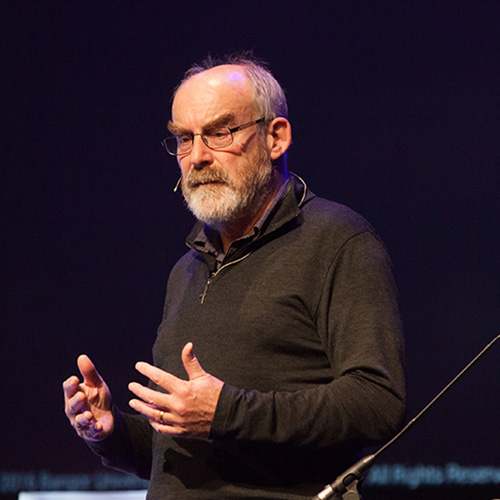
Prof. David SnowdenProf. David Snowden

Chief Scientific Officer, The Cynefin Company

David is the creator of the Cynefin Framework and the originator of SenseMaker®, the world’s first distributed ethnography tool. He is lead author of *Managing complexity (and chaos) in times of crisis: A field guide for decision-makers*, developed in collaboration with the European Commission’s Joint Research Centre and the Cynefin Centre. As founder and Chief Scientific Officer of The Cynefin Company and founder and Director of the Cynefin Centre, his international work spans government and industry, focusing on complex strategy and organisational decision-making. He is widely recognised for pioneering a science-based approach to organisations, drawing on anthropology, neuroscience and complex adaptive systems theory, and is a sought-after keynote speaker known for his pragmatic and iconoclastic style.

David holds academic positions as Extraordinary Professor at the Universities of Pretoria and Stellenbosch and Visiting Professor at the University of Hull, having previously held roles at Bangor University, Hong Kong Polytechnic University, the University of Warwick, the University of Surrey and others. He has also served as Senior Fellow at the Institute of Defence and Strategic Studies at Nanyang University and the Civil Service College in Singapore and has contributed to major research initiatives in complexity science in both the UK and US.

His co-authored Harvard Business Review cover article on leadership (2007) won the Academy of Management award for best practitioner paper, and he has received additional recognition for originality in knowledge management. A former IBM Director of the Institute for Knowledge Management and founder of the Cynefin Centre for Organisational Complexity, he was selected as one of IBM’s global on-demand thinkers. Earlier in his career, he held a range of strategic and management roles across the service sector.

Balancing Human & AI Reasoning in a Complex World – Part 2

In this session, David will introduce practical, complexity-based methods such as SwarmCompass and Estuarine Mapping, offering consultants new, actionable ways to navigate uncertainty and design interventions without relying on prediction. Rather than forcing certainty where none exists, these approaches help practitioners work with the realities of ambiguity, emergence and shifting constraints.

Drawing on decades of experience in complexity science and organisational strategy, David will challenge linear thinking and provide grounded, field-tested tools that can be immediately applied in client environments, particularly where AI, rapid change and increasing system interdependence demand more adaptive ways of working.

Scroll To Top