
It’s another auditing scandal – yet management consulting once again wears the consequences


The KPMG scandal dominating the front pages is yet another auditing story. Once more, management consulting is tarred with the same brush, while facing most of the consequences and collateral damage.
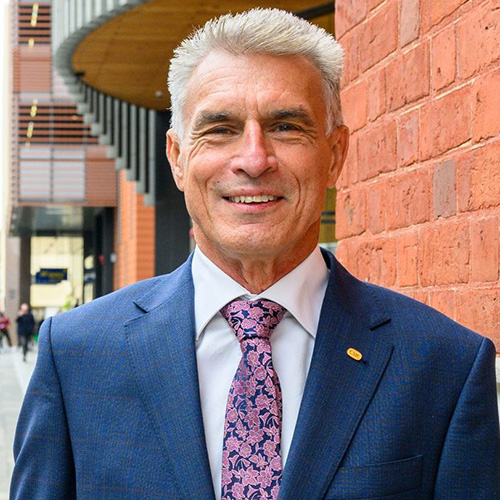
By Michael McLean Managing Director, McLean Management Consultants
The Tax Practitioners Board has opened a formal investigation into allegations that KPMG misused confidential client information to help win external audit work, and the corporate regulator has since begun its own investigation into several of the firm’s registered auditors. KPMG says its investigations have not substantiated the whistleblower’s claims, though it has acknowledged one incident of unauthorised access to client documents, and nothing is yet settled.
The official response has followed a familiar script: parliamentary hearings, ministerial statements, and now a Treasury options paper on regulating the auditing sector, which was prompted by the PwC government tax breach scandal (1) and now impacts the professional management consulting sector. In almost every case, the word “consulting” makes the headlines, even though it is not at all a consulting scandal.
Why the confusion? Because the largest firms consolidate audit, tax and consulting under a single brand name. When one arm of the business fails, the public reasonably looks to the brand, not the organisation chart. Over two decades, “consulting” has quietly become shorthand for “professional services firm”. The term has become so broad that it is now a branding accident rather than a description of a profession.
The two disciplines could hardly be more different. An ‘audit’ can be:
a) An ASIC statutory function (3) – It exists because the law requires it, it follows prescribed compliance standards, and it carries a structural tension that has been debated for as long as the model has existed: the auditor
b) An audit conducted under ISO management system standards (4) – “It is applicable to all organisations that need to plan and conduct audits of management systems or manage an audit programme”.
Management consulting is neither an ASIC statutory audit nor an ISO management system audit. It is discretionary advice, engaged by choice, assessed on results, and dispensable the moment it stops adding value. A management consultant who loses a client’s trust loses the client. That is the discipline the market imposes on us in the management consulting profession for every engagement.
None of this is an attack on the large firms, many of which employ excellent management consultants. Ironically, many single consultancies work with them, usually on implementation, and are as frustrated by the headlines as anyone. The problem is not the people. The problem is a business model that houses statutory assurance, tax advice and commercial consulting under one roof, sharing one client list and one profit pool. This conflicted multi-service model is the common thread where misconduct has occurred or is alleged across this sector in recent years. Management consulting practised on its own terms is not conflicted.
This distinction matters right now for a practical reason. Treasury’s options paper, open for submissions until 12 August 2026, canvasses remedies that include the licensing of firms through ASIC, caps on partner numbers and structural separation of business lines. Reasonable people can debate each of these. But they have one thing in common: they are all firm-level responses designed to address the failures of the audit model. Applied indiscriminately across “consulting”, these remedies would burden a profession that did not cause the problem, while failing to address a more important question.
That question is about individuals. As the Institute of Management Consultants (IMC) (5) has consistently argued, trust in advice ultimately attaches to the person giving the advice, not the letterhead behind them. You can license a firm, cap its partners and separate its divisions, and still have no answer to the questions a client most needs answered: who exactly is either auditing or advising me, what accreditation and certification standards are they held to, and what happens if they breach them? The mechanisms for that already exist in this profession, through certification and enforceable codes of conduct. The reform debate has barely noticed this fact.
I have run a management consulting practice since 1988. In thirty-eight years, no client has ever asked about the number of partners in my firm. Every client, in one form or another, has asked whether they can trust the person across the table and whether I can advise them. If not, they want to know whom I would suggest they contact instead. We recently completed such an engagement for a Defence and AUKUS assignment. Our report was accepted by the client and forwarded to the Government and AUKUS Defence ‘Primes’ to approve the funding and implementation of our recommendations.
So let the scrutiny come. The management consulting profession should welcome it, and those of us in it should be the loudest voices insisting that standards be real and accountability enforceable. All we ask is that the scrutiny be aimed accurately at the conduct and the structures that produced it. Sadly, this cycle is probably not finished yet.Which leaves a question nobody in Canberra is asking. If the big brands are wounded, and buyers of advice are already changing their behaviour, what happens to the market for management consulting in this country?
That is worth a column of its own.
- Senate releases final consulting industry report after lengthy inquiry
- Audit industry crackdown: New government options paper targets structural separation of consulting giants following recent scandals
- https://www.asic.gov.au/regulatory-resources/financial-reporting-and-audit/auditors/auditor-independence-and-audit-quality/
- ISO 19011:2026 | Standards Australia Store
- Consulting’s trust problem isn’t the one in the headlines – IMC Australia
Michael McLean is Managing Director of McLean Management Consultants and an Academic Fellow and Certified Management Consultant of the Institute of Management Consultants; Fellow of the Australian Institute of Company Directors; Senior Fellow of the Australian Graduate School of Leadership; Distinguished Adjunct Professor (RMUTK, Thailand); Dr JM Juran Medallist.
 Brendan Reidy




 Gilbert Kruidenier
 Phil George
 Carly Forrest
 Jules Yim
 Prof. David Snowden