
Relationships, Responsibility and Reciprocity: A First Nations Approach to Consulting in the AI Era


While artificial intelligence presents management consulting enormous opportunities for efficiency and innovation, it also raises an important question: what remains uniquely human in consulting practice? As a First Nations management consultant, I believe the answer lies not in information, but in relationships.
By Carly Forrest Founder, The Dreaming Collective
Much of my thinking is influenced by Aboriginal philosopher Aunty Mary Graham[AT1.1], who describes Aboriginal society as fundamentally grounded in relationships and responsibility. Rather than viewing individuals as separate from one another, Aboriginal philosophies understand that people, place, knowledge and governance as interconnected. Rights come with responsibilities. Authority comes with accountability. Decisions are understood through their impact on relationships and community.
Long before modern institutions emerged, Aboriginal and Torres Strait Islander peoples developed sophisticated systems of governance, trade, decision-making and knowledge sharing, all grounded in relationships, responsibility and reciprocity. These are not simply cultural values. They are governance principles that have enabled communities to navigate complexity, change and uncertainty for more than 60,000 years.
In my own work across government, infrastructure, governance and Indigenous business development, I am seeing increasing pressure for speed, certainty and delivery. AI is accelerating this pressure, yet the challenges clients bring to consultants are becoming more complex, more relational and more human.
This creates a tension: while technology is becoming increasingly capable of generating information, strategy and analysis, legitimacy still depends on trust. Trust depends on relationships, and forging relationships require time, judgement and accountability.
For me, this is where First Nations consulting practice offers one of its most important lessons.
Relationships Before Outputs
Consulting has always operated under pressure. Clients want certainty, timelines are compressed, and increasingly we are being asked to deliver more with less. AI has accelerated this reality.
Today, AI can support policy development, strategic planning, governance frameworks, reporting and analysis at remarkable speed, and I see real value in these tools. But I also see a risk emerging.
When speed becomes the dominant measure of success, engagement can become transactional. Communities become stakeholders rather than authority holders, while data replaces lived experience. Consultants begin relying on system outputs rather than exercising professional judgement.
In First Nations contexts, these risks become particularly visible. A process can meet every compliance requirement and still fail relationally. Communities know the difference immediately. Legitimacy is not measured by whether engagement occurred. It is measured by whether relationships, authority and accountability were genuinely respected.
In First Nations engagement, context often matters as much as content. Silence, for example, is not necessarily the absence of information. It can signal respect, reflection, disagreement, agreement, uncertainty or a lack of cultural safety. Understanding those distinctions requires observation, relationships and judgement. AI can process data, but it cannot interpret cultural meaning. That remains a human responsibility.
One of the biggest lessons I carry from my culture into consulting is that relationships are not a precursor to the work. Relationships are the work. Before I think about deliverables, frameworks or reports, I think about who holds authority, who needs to be involved, and how legitimacy will be built throughout the process.
When Good Process Creates Harm
Recently, I worked alongside an Indigenous organisation undergoing a significant external review process. On paper, everything appeared sound: the methodology was structured, timelines were clear and information requests were comprehensive.
Yet there was one significant gap: the process had not been designed with cultural considerations in mind. There was limited understanding of the extra “cultural load” on people to act as cultural spokespersons and educate others.
Likewise with relational accountability and the additional pressure being placed on a small Indigenous team already carrying significant community responsibilities. What began as a governance exercise quickly became a human impact issue: people became overwhelmed, trust began to erode, and the process itself started creating harm.
This was not the result of poor intent. It was the result of a process that prioritised extraction of information over relational engagement. Procedural compliance does not automatically create ethical, culturally safe or sustainable outcomes. How a process is conducted matters just as much as the outcome itself.
For consultants, this is a powerful reminder that legitimacy cannot be audited into existence. It is built through process, relationships and trust.
Technology as a Modern-Day Message Stick
Despite these cautions, I remain optimistic about technology, and one of the best examples I have seen of its effectiveness comes from community engagement.
I regularly facilitate workshops with Elders, community members and First Nations organisations, using digital tools such as Mentimeter to support participation.
Initially, I was uncertain how these tools would be received. What surprised me was how quickly participation increased once people understood the purpose. People who would not normally speak in a large group contributed. Quieter voices became heard, emerging themes could be identified almost instantly, and discussions became more inclusive.
It’s important to note that the technology itself did not build this trust. The relationships, the cultural safety and the facilitation did. The technology simply supported the process.
Through this work, I have started thinking about technology as a modern-day message stick. Traditionally, message sticks carried information, invitation and intent between people and communities. The message stick itself was never the relationship; it simply supported the relationship.
Used well, technology can play a similar role today, helping carry stories, perspectives and knowledge across increasingly complex systems. But just as with traditional message sticks, meaning still depends on relationships, context and responsibility. The tool alone is never enough.
Data, Governance and Responsibility
The rise of AI also requires consultants to think more carefully about data. There is often an assumption that data is neutral. If something is evidence-based or algorithmically supported, it can easily be perceived as objective.
From a First Nations perspective, data is never separate from people. Data is connected to identity, community, history, rights and power. For many Indigenous peoples globally, data has historically been collected about us rather than governed with us or by us. That history continues to shape contemporary conversations about Indigenous Data Sovereignty and Indigenous Data Governance.
In Australia, organisations such as Maiam nayri Wingara[AT2.1], alongside Indigenous researchers and practitioners including Dr Cas Sedran-Price[AT3.1], have helped advance important conversations around Indigenous Data Sovereignty, governance and the ethical application of emerging technologies. Globally, the CARE Principles developed by the Global Indigenous Data Alliance[AT4.1] provide a useful framework through the concepts of Collective Benefit, Authority to Control, Responsibility and Ethics. Recent work by Bronwyn Carlson and Tamika Worrell[AT5.1] extends this thinking directly into AI governance.
These frameworks matter because they move governance beyond mere compliance and back towards accountability. Good governance is not simply about protecting data, it is about protecting people.
For consultants working with AI and digital systems, this raises deeper questions. Who controls the data? Who benefits from it? Who interprets it? And, perhaps most importantly, who carries the consequences?
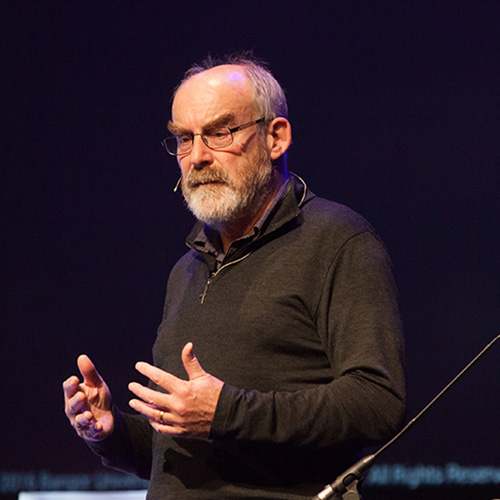
I see strong connections between these ideas and complexity thinking. Frameworks such as Cynefin[AT6.1], developed by Professor Dave Snowden, remind us that not all challenges can be solved through linear analysis alone. In complex environments, more data does not automatically create better understanding. Sometimes it simply creates more confidence. And confidence without context can be dangerous.
The Future Consultant
I believe the consulting profession is entering an important transition. For a long time, technical expertise and access to information were among the primary sources of consulting value. That is changing as information becomes more accessible, analysis faster, and outputs easier to generate. This does not diminish the role of consultants, but it does change their role.
I believe the future consultant will be valued less for their ability to generate information and more for their ability to exercise judgement. Technical output, speed and efficiency will remain important, but will more and more be supported by technology.
As technology becomes increasingly capable of generating answers, consultants will increasingly be valued for asking better questions. Consulting capabilities that will become more valuable include ethical judgement, relational intelligence, cultural fluency and the ability to navigate complexity responsibly.
These are capabilities that First Nations peoples have been exercising for generations. Our systems have always recognised that good decision-making requires listening, observation, accountability and an understanding of the impacts decisions have on people and communities over time.
In practice, this means reclaiming judgement rather than ceding it to the fastest output. It means identifying the moments in an engagement where legitimacy is genuinely at stake and slowing down at these critical points rather than across the whole process. It means validating findings beyond what the data shows, and designing engagement deliberately rather than treating it as a formality ahead of the “real” deliverable.
None of this is about resisting AI. It is about understanding what it can and cannot do, and protecting the human judgement that sits around it. AI can support the work, but it cannot hold responsibility. Responsibility sits with people, with relationships and with community. For me, that is not only a First Nations principle, it may be one of the most important principles shaping the future of consulting.
This article was drafted with AI-assisted editing support for structure, length and phrasing. The argument, perspective and sources are my own.
About the Author
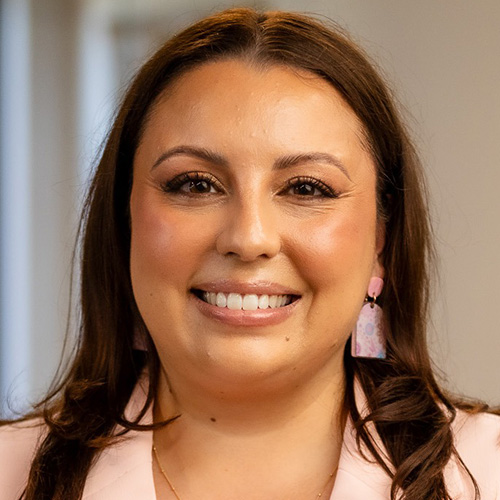
Carly Forrest is a proud Mandandanji woman and Founder of The Dreaming Collective, a First Nations-led consultancy based on the Sunshine Coast. She works across governance, infrastructure, Indigenous business development, community engagement and strategic planning, supporting organisations to build stronger relationships with First Nations peoples and communities. Carly also serves on several national and community boards, bringing a practical governance perspective to her consulting work.
 Brendan Reidy


 Gilbert Kruidenier
 Phil George
 Carly Forrest
 Jules Yim
 Prof. David Snowden