Focusing on the Ethical Blind Spot in Change Consulting
 Change consultants have built careers on helping organisations do hard things well.
But who is keeping us honest?
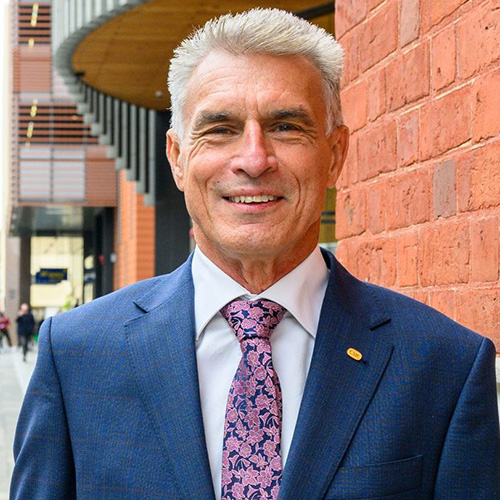
By Gilbert Kruidenier
Change consultants thrive on navigating organisations through difficult challenges, but what happens when structural pressures and vested interests threaten to compromise their judgment? Rather than just rely on their good intentions, they can benefit from a repeatable diagnostic that highlights all the ethical implications of a situation before decisions are made, not after the fact.
Instead of simply refreshing their definition of ethical conduct, change consultants are better served by asking themselves what is it about the structure of consulting work that makes ethical compromise so prevalent, and yet so easy to miss.
Not corruption. Not fraud. Not the dramatic failures that make for shocking headlines and compelling case studies. I’m talking about things that go unnoticed. The recommendation that is shaped by what you can deliver, rather than what the client really needs. The risk you don’t name, because that might cost you the project or even the contract. The stakeholder analysis that tells the executive what they want to hear, because the alternative is a very awkward conversation that you’re not sure you’ll survive.
This is the territory change consultants must navigate every single engagement, whether they have a framework for it or not.
The Structural Problem We Would Rather Skip Past
No one would argue that internal change practitioners never face ethical pressures. But consultants face a different set, and these pressures compound in ways to a magnitude that we have to acknowledge, before we can understand the conundrum they create.
When your income depends on a client relationship, your judgment is not neutral. Even when you think it is, it’s very likely not, because us humans, we’re not exactly perfect. The question is: can you acknowledge this risk and manage it, or just assume your good intentions are all the safeguard you need?
Consider a few scenarios that would feel familiar. You are brought in to support a transformation that, three weeks in, you are reasonably confident is going to fail. Not because of execution risk, but simply because the original design the leadership team conceived is wrong for the context. Do you say so, knowing it will likely end the engagement? Do you soften it so far that the message is lost? Do you focus on acing the scope and leave the strategic concerns for someone else to worry about?
Or perhaps you recommend a change approach with two credible options. One approach you know well, the other you don’t. You recommend the one you know, which happens to also require more of your time to implement. That recommendation may be entirely correct. But is it objective?
These are not hypotheticals. They are ordinary consulting moments. And most of us do not have a reliable way to examine them in the moment, instead we just do what we always do.
Key Distinction
The question is not if (change) consultants are ethical people. Most are. The question is if good intentions are sufficient protection against structurally compromised judgment.
Why Good Intentions Are Not Enough
Business ethics research consistently shows that people systematically overestimate their own ethical behaviour. Not because they are dishonest, but because most ethical failure is experienced as a reasonable professional decision made under pressure, not as a choice.
A 2000 study from Cornell University found that participants who described themselves as highly ethical were no more likely to behave ethically in ambiguous situations than those who did not. They were actually less likely to recognise ethical dimensions in scenarios when framed as business decisions, rather than moral decisions.
Change consultants are especially vulnerable to this failure to recognise ethical concerns. The work is inherently ambiguous, stakeholder dynamics are complex and there is almost always a defensible rationale for the path of least resistance (pun intended). The ethical and the expedient are rarely in direct conflict, rather, they erode gradually until all you have left is a lot of grey.
What would help practitioners to remain ethical is a repeatable diagnostic that makes the ethical dimensions of a situation visible before a decision is made, not after.
A Practical Check for the Grey Zone
The 4C Check examines the grey zone by addressing Context, Clarity, Conduct, and Consequence. This four-part diagnostic does not tell you what to do. Instead, it surfaces what you might otherwise miss.
Context
Before anything else, ask yourself: what are the power dynamics at play? Who is asking you to do this, and why? What financial, relational and organisational pressures are shaping the situation? Context is the starting point because ethical drift is almost always contextual. The same action can be appropriate in one setting and deeply problematic in another.
The diagnostic questions to ask are: Whose interests does this serve? What pressures are shaping my judgment right now? Am I reading this situation clearly, or through the lens of the outcome I desire?
Clarity
Once you understand the context, the question is whether you are being clear. Clear with the client, clear with yourself, and clear with the people affected by the change. Clarity is mostly about honesty and whether the version of events you are presenting is the version you truly believe.
Have I stated the risks clearly, or have I softened them to manage a relationship? Am I recommending this because it is right, or because it is easier? Would I make the same recommendation if I had no financial stake in the outcome?
Conduct
This is the behavioural dimension, how you actually show up and operate, not just what you intend to do. Conduct asks whether your actions are consistent with your stated professional values and consistent with the interests of the people the change is happening to, not just the people commissioning it.
Am I treating people affected by this change as participants or as variables? Is my behaviour in private consistent with what I say in the room? What would a respected peer make of how I am handling this?
Consequence
The fourth and final check is forward-facing: what happens next, and to whom does it happen? Most ethical failures in change consulting are invisible in the moment. They show up in implementation, as impacts on the people who bear the cost of a poorly designed or dishonestly managed process. Considering consequences encourages you to make those downstream impacts visible at the beginning.
Who carries the risk if this goes wrong? Am I accounting for the full range of people affected, or just the ones in the room? If I fast-forward twelve months, what is the most likely outcome of this decision?
Practitioner Note
The 4C Check is not a compliance checklist. It is a thinking tool that derives its value from slowing down long enough for a decision and the rationale you construct for it to show themselves for what they are.
What This Check Requires of the Profession
Individual frameworks help individual practitioners, but the structural conditions that create ethical pressure in consulting work are not going to be resolved by one person running through a checklist of four questions before a client call.
The profession needs to engage in more frequent and more honest conversations about ethical challenges. About billing models and the incentives they create. About the gap between what clients are told and what consultants believe. About the difference between a trusted advisor and someone who has learned to tell a client what keeps them in the room.
Professional bodies have a role here too. Standards of practice that treat ethics as simply a compliance matter, a code to sign or a box to tick, are not going to address this issue. What we need is a genuine culture of ethical accountability: peer review, case-based reflection, supervision models borrowed from the helping professions, and a genuine commitment to name the grey zone rather than pretend it is all black and white.
None of this is comfortable and I don’t think it ever will be. Ethical practice in change consulting is a foundational discipline, one that requires active maintenance, not just good intentions.
A Starting Point, Not a Solution
The 4C Check will not resolve every ethical dilemma you encounter as a consultant. Some of those dilemmas have no clean answer. What it will do is make dilemmas visible and that is an important first step.
Most of the ethical failures in change management do not happen because practitioners don’t care. They happen because the moment passed too quickly, the pressure was too immediate, and nobody stopped to ask the right questions.
The 4C Check’s purpose is to create a moment of reflection. What you do in that moment is up to you.
About the Author
Gilbert Kruidenier is the principal of Kruidenier Consulting with more than 20 years of experience leading strategic change across a range of industries and sectors. He is the author of 10 Years writing about Change, Bad Change: 50 Ways Change Doesn’t Work and Bad Sponsor. He is a casual lecturer at Deakin University and a Queensland Committee Member of the Change Management Institute. He is also a volunteer firefighter, greyhound rescue volunteer and co-host for the annual Australasian Change Days conference.
 Brendan Reidy



 Gilbert Kruidenier
 Phil George
 Carly Forrest
 Jules Yim
 Prof. David Snowden