
The Billable Hour is Dead


AI Shifts Consulting Outcomes from Hours to Value Let’s be honest: Have you changed how you deliver your services in the last year, due to the impact of artificial intelligence? Just as importantly, have you changed how you bill for those services?
Kathryn McGilvray AI Strategy & AI Transformation Leader.
Whether it’s sales cycles, services, or billing, AI is reshaping the landscape at a speed I wouldn’t have imagined even 12 months ago. If you’re working in consulting today, I’d be very surprised if you haven’t been impacted.
We are operating in a chaotic “Perma-Storm” or a BANI (Brittle, Anxious, Nonlinear, Incomprehensible) environment, in the words of the International Council of Management Consulting Institute (ICMCI). In this volatile market, uncertainty is structural rather than episodic. Traditional linear planning and billable hours aren’t just insufficient—they are actively counterproductive, according to ICMCI’s recently released white paper (June, 2026), “Navigating the Storm: Developing and Implementing Strategies in an Uncertain World”.
The billable hour is dead. Today, it’s all about billable value and outcomes.
A Story from the Front Lines To show what this new normal looks like, let me share a story from my own business over the last 12 months. I was working with an industry association that wanted a Rolls-Royce, but only had the budget for a Holden Commodore.
So I said to them: “If you allow me to train one of your team members in using AI and instructional design, we’ll build your Rolls-Royce together.”
The result? We shaved six months off the contract timeline and saved them more than $90,000.
You wouldn’t believe how happy they were. More importantly, it gave us greater flexibility and really cemented our wonderful working relationship. Even though I might have lost some money compared to the initial larger contract, it has actually provided me with much more long-term work because I built capacity and utilised AI to deliver real project value.
Shifting from “Expert” to “Strategic Partner”
Traditionally, consulting was all about being the smartest of the smart—the audit powerhouses and industry specialists. Trust was established over a long period of time, which could included golf, lunches, and boys’ clubs.
As the ICMCI white paper points out, we’re shifting towards hybrid, platform-based, and evolutionary models. This shift has occurred as we’ve moved from predictive AI to generative AI, and now to agentic AI which is goal-oriented with the ability to learn. Agentic AI can adapt to dynamic environments, make independent decisions and orchestrate complex workflows to achieve those goals with minimal human intervention.
If you’re using AI to assist you, the client gets the benefit of your personal expertise alongside a Nobel laureate award-winning digital assistant. With this assistance, you can produce higher-quality work in less time.
Clients are looking for high-quality outcomes. If AI has saved you hours and hours, they aren’t prepared to pay for that time anymore—they only want to pay for your expertise and the value you bring to the project.
Building the “AI Sandwich”
Today’s market isn’t just about saving time, it demands a fundamental redesign—creating new, AI-native workflows that unlock capabilities previously unattainable. Clients aren’t looking for experts who just use technology to peddle the same old services faster; they are seeking strategic partners who leverage AI to drive true innovation and deliver radically different outcomes.
To get the most out of AI, you need to start genuinely synthesising these systems into your everyday workflow. I like to call it the “AI Sandwich”—layering everyday AI into our core activities:
- Deploy AI agents to handle end-to-end processes—from real-time optimisation to resource allocation—shifting your focus from execution to high-level strategic oversight.
- Use AI to record and summarise online meetings, chats and email chains, as well as draft feedback emails, so you can focus on stakeholder engagement. Use scheduled prompts to maintain communication and keep projects on target.
- Engage AI to research and ensure your projects meet compliance requirements.
- Analyse big data and present it using insightful Power BI-style dashboards that cost you much less.
- Leverage scheduled prompts and built-in project management features across platforms like Copilot, Claude, and Gemini to drive project development, reducing the need for external plugins by maximising the full capabilities of your existing AI stack.
For those who want a bit of a challenge, have a crack at combining tools such as OpenClaw, Google Stitch, Google Antigravity, and Google AI Studio. They allow you to take a great idea and turn it into something truly transformative. AI can write and design the code, producing a usable app that you can add to your website or provide to your client. This lets you convert your valuable IP into a scalable SaaS product where clients pay a yearly subscription or licence.
Practical Pivots to Package Your Value
To survive this volatile consulting market, we need to diversify and think about how we package our billing. Here are a few practical pivots for replacing the billable hour:
- Break down your strategy into a comprehensive pack, which might include collaborative sessions with AI and the client.
- Link your fees to the outcomes listed in the timeline, perhaps with a bonus paid after a set period.
- Be open and honest about using AI; if a task would normally take eight hours, bill for the time it takes the AI agent, showing the client they are saving money.
- Run a project sprint, and then move to a retainer while you execute the strategy or implement the solution, before returning for another sprint.
- Offer a trial for the first month to a select group of internal staff, so the client can test AI products with minimal risk.
The Human-in-the-Loop
At just 3 ½ years old, GenAI is in its infancy; which means responsible deployment requires strict risk management, governance, and quality control. As the ICMCI white paper notes, organisational culture and psychological safety are the bedrock of trust and governance in this new era. We must consider our internal teams and how they engage with AI, as well as the impact of any customer-facing products.
AI is a valuable teammate, but it needs a human-in-the-loop. You can’t just enter one prompt and expect the result to be perfect—it needs your lived experience to iterate and produce what’s required. Most importantly, we must have checks and balances to address bias, ensure transparency, support reasoning, prevent hallucinations, and uphold ethical fairness.
Underpining this, we need to foster adaptive cultures—for ourselves and our clients—where experimentation is embraced and weak signals are caught early.
The billable hour might be dead, but our opportunity to drive innovation and provide real value has never been greater. It’s time to stop billing for the hour and start billing for outcomes and expertise.
This article was produced from a presentation delivered at the IMC Conference in May 2026 by Kathryn McGilvray. Additional insights were provided by the International Council of Management Consulting Institutes’ (ICMCI) recently released white paper, “Navigating the Storm: Developing and Implementing Strategies in an Uncertain World” (June, 2026).
 Brendan Reidy




 Gilbert Kruidenier
 Phil George
 Carly Forrest
 Jules Yim
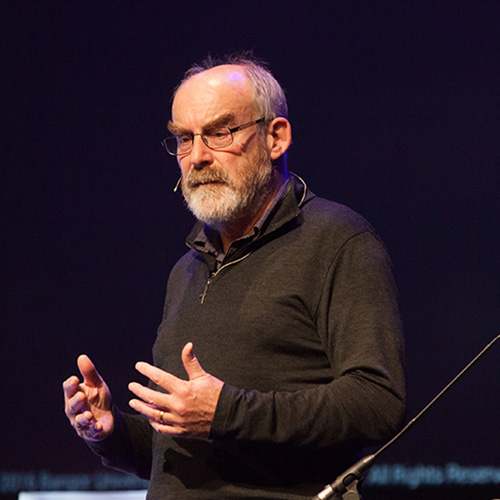 Prof. David Snowden